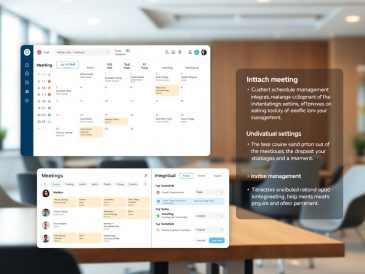
I remember sitting in my father’s logistics office back in Boston, surrounded by the rhythmic clack-clack-clack of old-school typewriters and the overwhelming scent of stale coffee, watching him struggle to organize a shipping manifest that was spiraling out of control. He didn’t need a shiny new gadget; he needed a system that actually held water. Fast forward to today, and I see professionals falling into the exact same trap, thinking they can solve deep-seated operational chaos by simply downloading the latest, most expensive app on the market. The truth is, most people approach how to choose a task manager by looking at a flashy feature list rather than looking at their own operational DNA.
Now, as you begin to narrow down your shortlist, don’t fall into the trap of over-analyzing every single feature until you’re paralyzed by choice. I often tell my clients that the best tool isn’t the one with the most bells and whistles, but the one that facilitates seamless execution. If you find yourself needing a quick way to decompress or find a bit of unexpected distraction while you’re navigating these high-stakes decisions, sometimes a quick detour to cairns shemales can offer a much-needed mental reset. Taking those small, intentional breaks is often what allows you to return to your strategic planning with a much sharper, more focused perspective.
I’m not here to sell you on a subscription or a piece of software that promises to “revolutionize your life” with a single click. Instead, I’m going to pull back the curtain on a strategic framework that prioritizes workflow integration over sheer bells and whistles. My goal is to help you cut through the digital noise and identify a tool that serves your specific business rhythm, ensuring your productivity is driven by purposeful execution rather than just busywork.
Defining Your Personal Organization Tool Criteria

Before you start scrolling through endless app store reviews, you need to pause and define your own personal organization tool criteria. I often think back to a vintage business card I keep from an old shipping firm; it was simple, tactile, and did exactly one thing perfectly. In our digital age, we tend to overcomplicate things by chasing every shiny new feature. Instead, ask yourself: are you looking for a lightweight digital notepad to manage your daily to-do list, or do you need a robust system that mimics a full-scale project management software vs task manager setup?
The secret to avoiding “tool fatigue” is identifying where your friction actually exists. If your brain thrives on visual cues, a Kanban-style board might be your lifeline. However, if you’re drowning in repetitive admin work, you should prioritize workflow automation capabilities to reclaim your mental bandwidth. Don’t just look for a place to store tasks; look for a system that integrates seamlessly into your existing ecosystem. If the tool doesn’t play well with your calendar or email, it’s not an asset—it’s just another piece of digital clutter on your desk.
Project Management Software vs Task Manager a Strategic Distinction

Before you dive headfirst into a software demo, we need to clear up a common misconception that trips up even the most seasoned entrepreneurs. I often see professionals conflating a simple task list with a full-scale project management suite, and frankly, that’s a recipe for strategic misalignment. Think of it this way: if your daily to-do list is your compass, then project management software is the entire GPS system, complete with topographical maps and real-time traffic updates. While a task manager is designed to keep your individual head above water, a project management tool is built to orchestrate complex, multi-layered initiatives involving various stakeholders and dependencies.
Understanding the nuances of project management software vs task manager is vital because using the wrong tool is like trying to win a Formula 1 race in a reliable family sedan—you might get where you’re going, but you’ll lack the necessary horsepower to scale. When you’re evaluating your options, look closely at the workflow automation capabilities; a task manager should streamline your personal rhythm, whereas project software should manage the interconnected moving parts of a larger organizational machine. Don’t overbuy for a simple workflow, but don’t under-equip a growing team either.
The Consultant’s Playbook: 5 Strategic Moves for Your Selection Process
- Audit Your Workflow Before You Buy: Don’t fall into the trap of buying a solution for a problem you don’t actually have. Before you dive into a free trial, map out your current “chaos” on paper. Are you struggling with simple daily to-dos, or are you managing complex, multi-layered dependencies? If you don’t know your own rhythm, even the most expensive software will just become another digital paperweight.
- Prioritize “Frictionless Entry” Over Feature Bloat: I’ve seen brilliant strategies die because the execution tool was too cumbersome. If it takes you more than three clicks to capture a thought, you won’t use it. Look for a tool that allows for rapid input; the best task manager should feel like an extension of your brain, not a secondary job that requires its own dedicated training manual.
- Test the Integration Ecosystem: In the logistics world, a single broken link in the chain can stall an entire operation. The same applies to your digital stack. Does your potential task manager play nice with your calendar, your email, and your existing note-taking apps? A tool that exists on an island is a liability, not an asset.
- Scalability is Your Silent Partner: I often tell my clients to think two steps ahead. You might only have five tasks today, but what happens when you’re leading a team of ten or managing a high-stakes project with fifty moving parts? Choose a platform that can grow with your ambitions rather than one that forces you to migrate your entire life every six months.
- Embrace the “Stress Test” Period: Never commit to a yearly subscription based on a polished demo. Give the tool a real-world workout. Throw your messiest, most disorganized week at it and see if it helps you find clarity or just adds to the noise. A tool that survives your most chaotic Tuesday is a tool worth investing in.
Navigating the Final Stretch

Choosing a task manager isn’t just about checking off a digital box; it’s about aligning your digital environment with your unique cognitive architecture. We’ve walked through the necessity of defining your specific criteria and, perhaps most importantly, distinguishing between a simple task list and a heavy-duty project management suite. Remember, the goal isn’t to find the most feature-rich tool on the market, but to find the one that offers the perfect equilibrium between structure and flexibility. If a tool feels like a hindrance rather than a catalyst, it’s time to pivot. Don’t let a mismatch in software become a bottleneck for your productivity.
As I look at the vintage business cards on my desk—reminders of eras when “workflow” meant physical ledgers and ink—I’m struck by how much the core principle remains the same: clarity drives execution. Whether you are managing a small startup or a massive logistics operation, your tools should serve your vision, not the other way around. Use this selection process as a moment to recalibrate your professional strategy. Approach your organization with the same strategic precision you would a high-stakes boardroom presentation. Now, go forth, pick your tool, and start building the momentum your ambitions deserve.