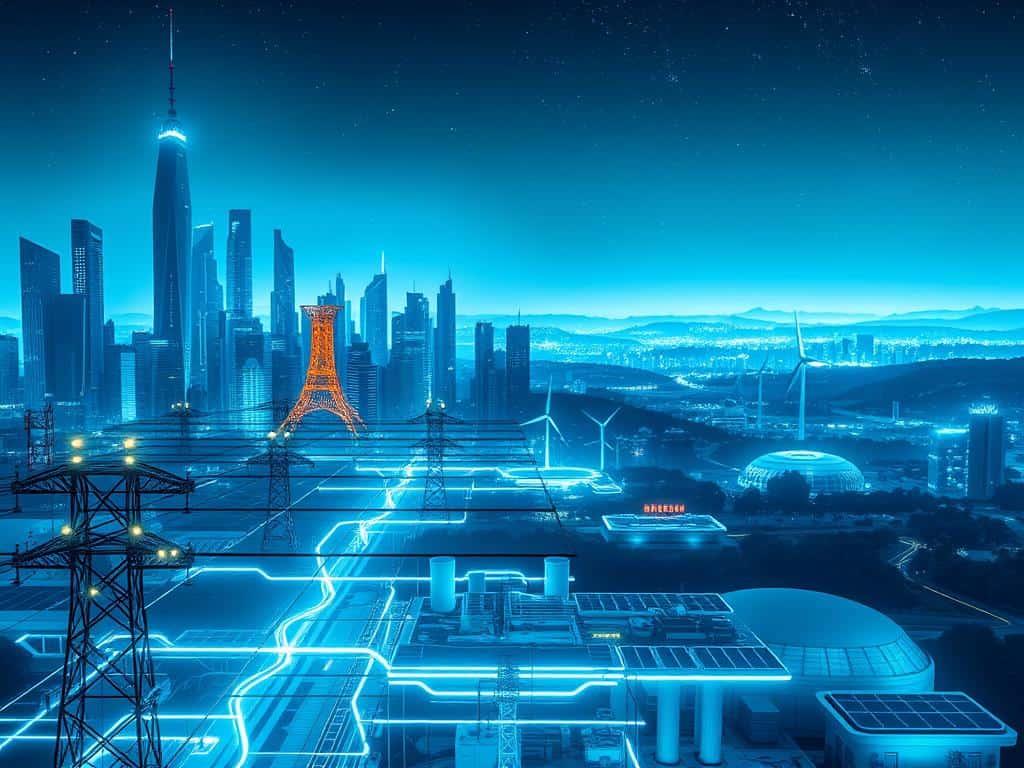
As I stood in my living room, I noticed small but important changes. I have smart devices that show me how much energy I use in real-time. This makes me feel like I’m not just using energy, but helping to make it better.
Smart grids are changing how we manage energy. They let people like me make choices that save money and help the planet. This technology is key as we need more clean energy than ever before.
Let’s dive into how smart grids are evolving, their benefits, and what’s next. They’re playing a big role in changing our energy world.
Key Takeaways
- Smart grids represent a significant advancement in energy tech.
- Real-time data allows consumers to manage their energy usage effectively.
- Integration of renewable sources enhances grid efficiency.
- Smart grids contribute to a sustainable power future.
- They improve reliability and resilience in energy distribution.
The Evolution of Smart Grids
The move from old power systems to smart ones is a big change. It’s how we make, send, and use electricity. Looking back at how grids have changed helps us understand today’s progress.
From Traditional Power Systems to Smart Technologies
Old power systems were based on big plants sending power to many areas. They had big problems with being efficient and reliable. Smart tech has changed this, making grids work better in real time.
Now, we see a shift to using more local energy sources. This makes our energy mix better and cuts down on fossil fuel use.
Historical Context of Electricity Grids
The first electricity grid started in 1882 in New York City. It was a big step, showing how power could be shared. Laws like the US Public Utility Holding Company Act of 1935 helped shape the energy world.
These changes helped make energy more stable during tough times. Knowing this history helps us see how we’re moving towards cleaner, smarter energy.
Benefits and Innovations of Smart Grids
Smart grids change how we use energy systems. They make them more reliable and resilient every day. These systems use technology to find and fix problems quickly, keeping service running smoothly.
When extreme weather hits or unexpected issues pop up, smart grids can handle it. They manage energy loads on their own. This means faster recovery and less downtime.
Enhanced Reliability and Resilience
Smart grids make power delivery more consistent. They use smart tech to cut down on outages and fix them fast. This makes power more reliable, even in tough weather.
Integration of Renewable Energy Sources
Smart grids make it easy to use renewable energy. They balance energy supply and demand well. This lets me use green energy without losing reliability.
Empowering Consumers with Real-Time Data
Consumer empowerment is key in smart grids. With smart meters, I see my energy use in real-time. This helps me use energy wisely, leading to a greener lifestyle.
Conclusion
Smart grids are changing the way we use energy, making it more efficient and sustainable. They help us use more renewable energy sources. This also lets consumers see how much energy they use in real time, helping them make better choices.
Technology keeps getting better, which is key for smart grids to grow. They help us be more independent with our energy and support a greener future. This change is not just an update; it’s a big shift to meet our energy needs now and later.
I see a future where we use energy in a way that’s good for our planet. By using smart grid technology, we can make our energy use better and more sustainable. This will lead to a brighter future for everyone.