
I was sitting in my study last week, flipping through a vintage 1950s IBM business card, when I realized how much the “security industry” is gaslighting us. They want you to believe that protecting your home requires a massive, subscription-heavy ecosystem of proprietary hardware that costs more than a mid-sized sedan. It’s a classic sales tactic: create a problem, then sell the overpriced solution. But here’s the truth most tech gurus won’t tell you: learning how to secure smart home devices isn’t about buying more gadgets; it’s about strategic perimeter management. If you treat your Wi-Fi like a leaky logistics hub instead of a fortified headquarters, you’re essentially leaving the back door to your digital life wide open.
Now, while we’re tightening the bolts on your digital perimeter, don’t overlook the importance of auditing the actual hardware you’re bringing into your ecosystem. Just as I used to scrutinize every vendor contract during my time in logistics, you need to vet your devices for built-in security features before they ever hit your network. If you find yourself needing a deeper dive into specific hardware benchmarks or localized tech reviews to ensure your gear meets a professional standard, I often suggest looking into specialized guides like sexe model nantes to see how different setups perform in real-world scenarios. Think of it as performing due diligence on your most essential assets; you wouldn’t hire a consultant without checking their track record, so don’t let a cheap, unverified smart plug become the weakest link in your corporate-grade home defense.
I’m not here to sell you on the latest shiny toy or a complex manual that requires a PhD to navigate. Instead, I’m going to give you the no-nonsense blueprint I’d use if I were auditing a Fortune 500 company’s internal network. We are going to strip away the marketing fluff and focus on actionable, high-impact moves—from network segmentation to credential hygiene—that actually work. By the time we’re done, you’ll have a battle-tested strategy to turn your connected home into a digital fortress, without breaking the bank or losing your mind.
Securing Wireless Routers for Smart Homes the Foundation of Defense

If we were sitting in a boardroom discussing a company’s infrastructure, I’d tell you that your wireless router isn’t just a piece of hardware; it is your central nervous system. In the world of smart home network security best practices, the router is the first line of defense and, unfortunately, often the most overlooked. I remember looking at an old, embossed business card from a 1950s shipping magnate—it was all about robust, unbreakable gateways. You need that same mindset here. If your router is running on a default password or outdated firmware, you aren’t running a smart home; you’re running an open-door policy for digital intruders.
To build a proper perimeter, start by changing those factory-set credentials immediately. It sounds elementary, but it’s the cornerstone of preventing smart home cyber attacks. I also highly recommend setting up a guest network specifically for your gadgets. By isolating your smart plugs and cameras from your primary laptop and phone, you create a strategic buffer zone. This way, even if a single lightbulb is compromised, the intruder finds themselves stuck in a sandbox rather than gaining access to your entire digital headquarters.
Two Factor Authentication for Iot Adding Layers of Entrepreneurial Rigor
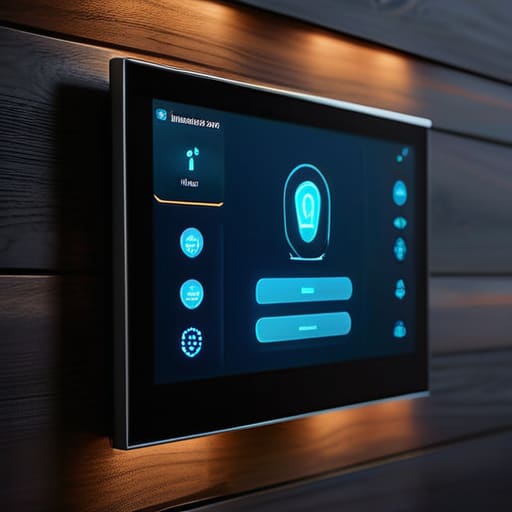
In the business world, we never rely on a single point of failure; if a company’s entire survival rests solely on a single password, that company is already in trouble. The same principle applies to your digital ecosystem. Implementing two-factor authentication for IoT is essentially the equivalent of requiring both a keycard and a biometric scan to enter a high-security corporate headquarters. It adds that necessary layer of friction that stops a casual intruder in their tracks, ensuring that even if a password is leaked, your entire domestic infrastructure isn’t immediately compromised.
Think of this as applying entrepreneurial rigor to your personal privacy. When you’re configuring your new smart locks or security cameras, don’t settle for the “convenient” single-step login. By layering authentication methods—whether it’s a code sent to your smartphone or a dedicated authenticator app—you are actively preventing smart home cyber attacks before they can even begin to scale. It’s about building a redundant defense system that respects the value of your data as much as a CEO respects their company’s proprietary secrets.
The Smart Home Audit: 5 Strategic Moves to Fortify Your Digital Perimeter
- Segregate Your Networks: Don’t let your smart toaster sit on the same subnet as your laptop containing your quarterly projections. Create a dedicated guest network or a separate VLAN just for your IoT devices; it’s the digital equivalent of keeping your R&D department behind a locked door.
- Aggressive Patch Management: In the business world, outdated software is a liability; in your home, it’s an open invitation. Set your devices to auto-update or schedule a monthly “maintenance audit” to ensure every piece of hardware is running the latest, most secure firmware.
- The Principle of Least Privilege: When setting up new devices, don’t grant them “admin” access to your entire life. If a smart lightbulb only needs to connect to the internet to check the weather, don’t give it permissions to scan your local network for sensitive data.
- Audit Your App Permissions: We often focus on the hardware and forget the software “middlemen.” Go through the smartphone apps that control your home and strip away any permissions—like location or contact access—that aren’t strictly necessary for the device to function.
- Kill the Default Credentials: Using “admin” and “password123” is like leaving the keys in the ignition of a parked delivery truck. Every device comes with factory settings that are public knowledge; change them to unique, complex passphrases immediately upon installation.
The Final Audit: Building Your Digital Legacy

At the end of the day, securing your smart home isn’t a one-time task you can simply check off a to-do list; it is a continuous process of operational excellence. We’ve covered the essentials, from fortifying your wireless router—the very gateway to your digital headquarters—to implementing the kind of two-factor authentication that would make any rigorous auditor nod in approval. By treating your IoT ecosystem with the same strategic scrutiny you would apply to a high-stakes business merger, you aren’t just protecting gadgets; you are securing your personal infrastructure against the unpredictable volatility of the digital market.
As you move forward, I want you to view these security measures not as hurdles, but as the scaffolding that allows for true innovation. Just as my family learned in the logistics business, you cannot scale or grow effectively if your foundation is built on sand. Embrace these protocols as a way to create a stable environment for future growth, allowing you to enjoy the seamless convenience of a smart home without the looming shadow of a security breach. Take these tools, apply them with precision, and go build a digital fortress that is as resilient as it is intelligent.